MWNUK welcomes the new government anti-Muslim hostility definition
|
Download PDF
Muslim Women’s Network UK (MWNUK) welcomes the new definition on anti-Muslim hostility published by the government. This definition will help to establish a crucial distinction between legitimate scrutiny of beliefs including debate on issues and the protection of Muslims (or those perceived to be Muslim) from unacceptable hatred and discrimination. Even though the definition is non-statutory, it will also provide essential legal, social, and institutional clarity. MWNUK CEO Baroness Shaista Gohir said: “I welcome the government’s decision to adopt most of the wording recommended by the Working Group, of which I was a member, including the term ‘anti-Muslim hostility.’ While the term ‘racialisation’ has been removed because it is not widely understood by the public, I am pleased that explanatory wording describing the process has been included in its place, including in the accompanying notes.” “I believe the working group has achieved the right balance - safeguarding individuals while avoiding overreach because free speech (including the right to critique religion) remain protected. The definition also recognises that Muslims are frequently targeted not only for their beliefs but also because of their characteristics such as appearance, race and ethnicity. Acknowledging that Muslims are racialised validates these lived experiences.” A coordinated campaign by disingenuous critics sought to block the definition through frequent social media posts and media articles spreading misinformation. They claimed that Muslims were being given special treatment, that free speech would be curtailed, and that criticism of Islam would be prevented—none of which were true. The critics repeatedly warned of a supposed ‘chilling effect’ that a definition would have, yet in reality the only ‘chilling effect’ has been the tolerance of anti-Muslim hatred, with abuse minimised or dismissed because they do not want Muslim safety to be properly protected. These same campaigners do not oppose the definition of antisemitism, which has been widely adopted across government and many other organisations. This selective opposition raises questions about consistency and suggests that their concerns are driven by politics rather than by principle. At present, most Muslims do not report incidents of anti-Muslim hostility. Approximately 4000 incidents are reported annually and as 80% are not reporting, the actual figures are more likely to be 20,000 hate crimes incidents. These numbers do not even include discrimination in the workplace or when accessing services. MWNUK CEO Baroness Shaista Gohir added: “Muslims are far more likely to come forward when their experiences are clearly reflected in an agreed definition. The definition will also strengthen accountability and make it harder for legitimate concerns to be ignored or dismissed. Careful consideration of terminology was also essential in accurately describing the issue in a range of settings, which is why the term ‘anti-Muslim hostility’ was recommended.” “Muslims are not seeking special treatment, which has been wrongly suggested by some. The definition does not create new rights or protections; rather, it helps institutions, employers, service providers, the police and regulators etc, to understand and recognise what anti-Muslim hostility looks like in practice. This enables existing laws and policies to be applied more consistently across different situations and sectors while reducing confusion caused by multiple definitions.” Anti-Muslim hostility in any setting can be reported to the Muslim Safety Net Helpline (a project set up by the Muslim Women’s Network UK) on 0303 330 0288 or by WhatsApp / Text 07311 876 378 and online https://www.muslimsafetynet.org.uk/report. The UK government’s non-statutory definition of anti-Muslim hostility is the following: Anti-Muslim hostility is intentionally engaging in, assisting or encouraging criminal acts – including acts of violence, vandalism, harassment, or intimidation, whether physical, verbal, written or electronically communicated – that are directed at Muslims because of their religion or at those who are perceived to be Muslim, including where that perception is based on assumptions about ethnicity, race or appearance. It is also the prejudicial stereotyping of Muslims, or people perceived to be Muslim including because of their ethnic or racial backgrounds or their appearance, and treating them as a collective group defined by fixed and negative characteristics, with the intention of encouraging hatred against them, irrespective of their actual opinions, beliefs or actions as individuals. It is engaging in unlawful discrimination where the relevant conduct – including the creation or use of practices and biases within institutions – is intended to disadvantage Muslims in public and economic life. Full Government Community Cohesion Strategy within which this definition sits can be found here: https://www.gov.uk/government/publications/protecting-what-matters-towards-a-more-confident-cohesive-and-resilient-united-kingdom/protecting-what-matters-towards-a-more-confident-cohesive-and-resilient-united-kingdom Additional Information 1. Media enquiries can be directed to: contact@mwnuk.co.uk or 0121 2369000 2. Muslim Women’s Network UK website: www.mwnuk.co.uk 3. Muslim Safety Net Helpline www.muslimsafetynet.org.uk |
|
Our Supporters

Caroline Nokes MP
Conservative Party
Muslim Women's Network UK ensures that the voices of Muslim women are heard. They are not just a support network but a movement for change. I am proud to work with them.

Jess Phillips MP
Labour Party
MWNUK is courageous because of the uncompromising and fearless positions it sometimes takes when calling out injustice and inequality

Sadiq khan
London Mayor
I am proud to support and champion this fantastic organisation, which is informing policy and transforming lives.
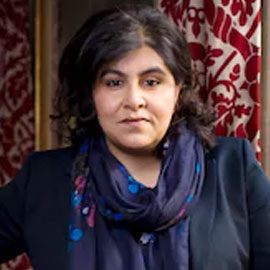
Baroness Sayeeda Warsi
Conservative Party
MWNUK’s authenticity comes from knowledge of lived experiences of Muslim women and girls acquired through their helpline, research and members.

Naz Shah MP
Labour Party
They work tirelessly with passion and commitment to make a difference and improve outcomes for some of the most vulnerable women and girls in society.